
For as long as I can remember, I’ve been fascinated by one question.
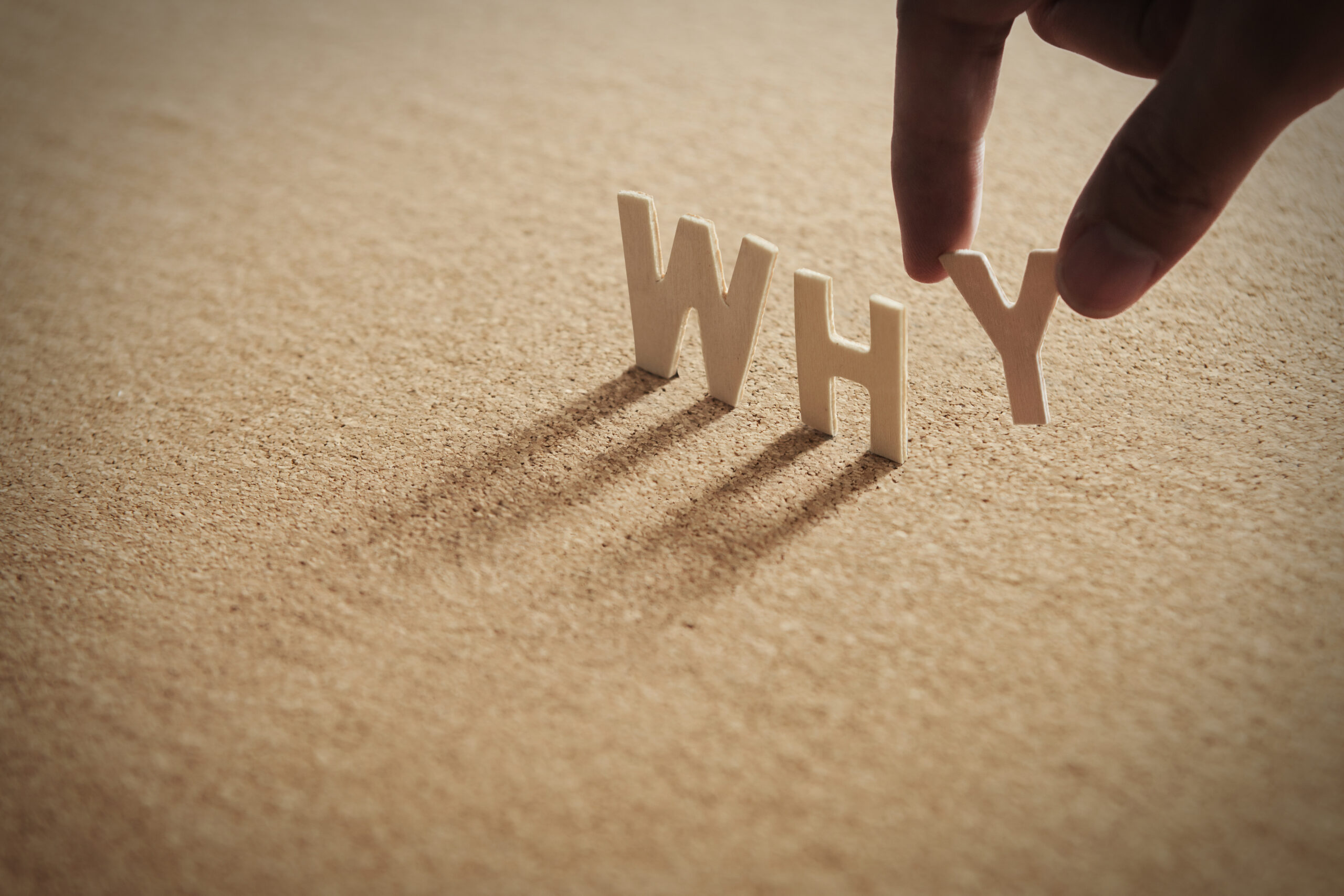
Why?
Not what happened.
Not who was responsible.
Not how everything fell apart.
Why.
Why did someone make that decision?
Why does one leader inspire trust while another slowly loses it?
Why do intelligent people continue repeating the same destructive patterns?
Why do some people thrive under pressure while others become controlling, defensive, or withdrawn?
I’ve always wanted to understand what was happening beneath the surface.
Long before coaching was my profession, I was the person who stayed after the conversation was over, replaying everything in my mind, trying to connect the dots. If a leader experienced a public moral failure, I wasn’t satisfied with headlines or simplistic explanations.
“It was an affair.”
“They got greedy.”
“They couldn’t handle the pressure.”
Those statements describe what happened.
They don’t explain why.
Somewhere, long before the public collapse, there were thousands of quiet decisions, hidden fears, unresolved wounds, unhealthy coping mechanisms, blind spots, and internal narratives that slowly shaped the outcome.
I’ve always wanted to understand that journey.
The same has always been true in everyday life.
Someone reacts harshly.
Someone constantly avoids conflict.
Someone has to control every situation.
Someone cannot receive feedback without becoming defensive.
Someone continually sabotages healthy relationships.
Most people see the behavior.
I’ve always wanted to understand the motivation underneath it.
That curiosity eventually led me into every personality and leadership assessment I could find.
Years ago, I devoured Florence Littauer’s Personality Plus. Later came Myers-Briggs, DISC, CliftonStrengths, SHAPE, spiritual gifts assessments, leadership inventories—you name it.
I genuinely loved them.
And I still do.
Every one of those tools offers valuable insight.
They help us understand communication styles, natural strengths, preferred ways of thinking, team dynamics, and areas of giftedness.
They answer many important questions.
But for me, something always felt incomplete.
They described people well.
They rarely explained them.
They could often tell me what someone preferred.
They couldn’t always tell me why.
Then in 2019, I was introduced to the Enneagram.
For me, it wasn’t another personality test.
It was language.
Language for motivations.
Language for fears.
Language for the internal drivers that quietly shape our decisions long before anyone ever sees our behavior.
Suddenly I wasn’t simply looking at personalities.
I was looking at the stories people tell themselves.
The fears they protect.
The needs they spend their lives trying to satisfy.
The ways they unconsciously cope with stress.
The motivations underneath the motivations.
It wasn’t always comfortable.
Actually, it was deeply uncomfortable.
Because understanding your core motivations requires looking at parts of yourself most people would rather avoid.
Take something as simple as introversion.
One assessment may identify someone as an introvert.
That’s helpful.
But it doesn’t necessarily tell us why.
Two people can both prefer solitude while living from completely different internal realities.
One person may recharge alone because that’s simply how they’re wired.
Another may withdraw because vulnerability feels unsafe.
Another because they fear criticism.
Another because perfectionism convinces them they’re never prepared enough.
Another because they have learned that distance protects them from disappointment.
The behavior looks identical.
The motivation couldn’t be more different.
If all we ever address is the behavior, we’ll spend years trying to fix something we never actually understood.
This is where I think so much leadership development unintentionally stops too soon.
We discover our communication style.
Our strengths.
Our leadership preferences.
Our personality profile.
We walk away saying,
“That’s so me.”
And often…it is.
But awareness alone isn’t transformation.
Knowing your tendencies isn’t the same as changing them.
Sometimes we’ve simply learned new vocabulary for old patterns.
I often think of it like caring for a lawn.
Imagine someone notices patches of brown grass.
The solution seems simple.
Throw down some grass seed.
Water it.
Watch everything turn green again.
Problem solved.
From a distance, it looks beautiful.
Fresh.
Healthy.
Restored.
But get down on your hands and knees.
Look closer.
Many times, what appears green isn’t healthy grass at all.
It’s weeds.
They’re green.
They’re growing.
But they’re still weeds.
Sometimes we’ve simply covered unhealthy ground with new growth instead of dealing with what was underneath.
Real lawn care isn’t glamorous.
Sometimes you have to pull weeds.
Treat diseased areas.
Dig into compacted soil.
Leave ugly bare spots for a season.
Plant the right seed.
Nurture it consistently.
Wait.
It’s slower.
It’s messier.
It requires patience.
But eventually, healthy roots produce healthy growth.
Leadership development works much the same way.
If we never deal with what is happening beneath the surface, we’ll spend our lives managing appearances instead of cultivating health.
I’ve become convinced that this is why so many people avoid deeper coaching and leadership development.
Not because they don’t want to grow.
Most leaders genuinely do.
They simply don’t want to become exposed.
Looking beneath our behavior requires honesty.
Humility.
Curiosity.
Courage.
It means admitting that our reactions didn’t appear overnight.
Our leadership patterns didn’t form overnight.
Our blind spots didn’t develop overnight.
And they probably won’t disappear overnight either.
But that doesn’t make the work less worthwhile.
It makes it more worthwhile.
Today, I still appreciate every leadership assessment I’ve ever used.
I recommend many of them.
Each serves an important purpose.
They help us understand strengths.
Build teams.
Improve communication.
Place people where they naturally thrive.
Those are valuable outcomes.
But when the conversation shifts toward emotional health…
Healthy cultures…
Relationships…
Conflict…
Trust…
Leadership under pressure…
Personal transformation…
I will always ask a different question.
Why?
Because beneath every recurring behavior is usually a recurring motivation.
Beneath every unhealthy pattern is often an unmet need, an unresolved fear, or a deeply held belief about ourselves that has quietly shaped our decisions for years.
That is where lasting change begins.
Not by managing symptoms.
By understanding roots.
I don’t ask “why” because I’m looking for someone to blame.
I ask “why” because I believe people can change.
I believe unhealthy patterns are not permanent identities.
I believe self-awareness is one of the greatest gifts a leader can develop.
I believe emotional maturity isn’t achieved by trying harder.
It’s developed by becoming more honest.
And honesty almost always begins with a simple question.
Why?
It’s a question I’ll continue asking of myself every day.
Because I have learned that the greatest breakthroughs in leadership rarely begin with better strategies.
They begin with the courage to understand ourselves.
That’s why I’ll always ask why.
